A Conversation With the Akane-banashi Team
- Interview Location: Anime NYC 2025
- Interview Format: In-person, Round Robin
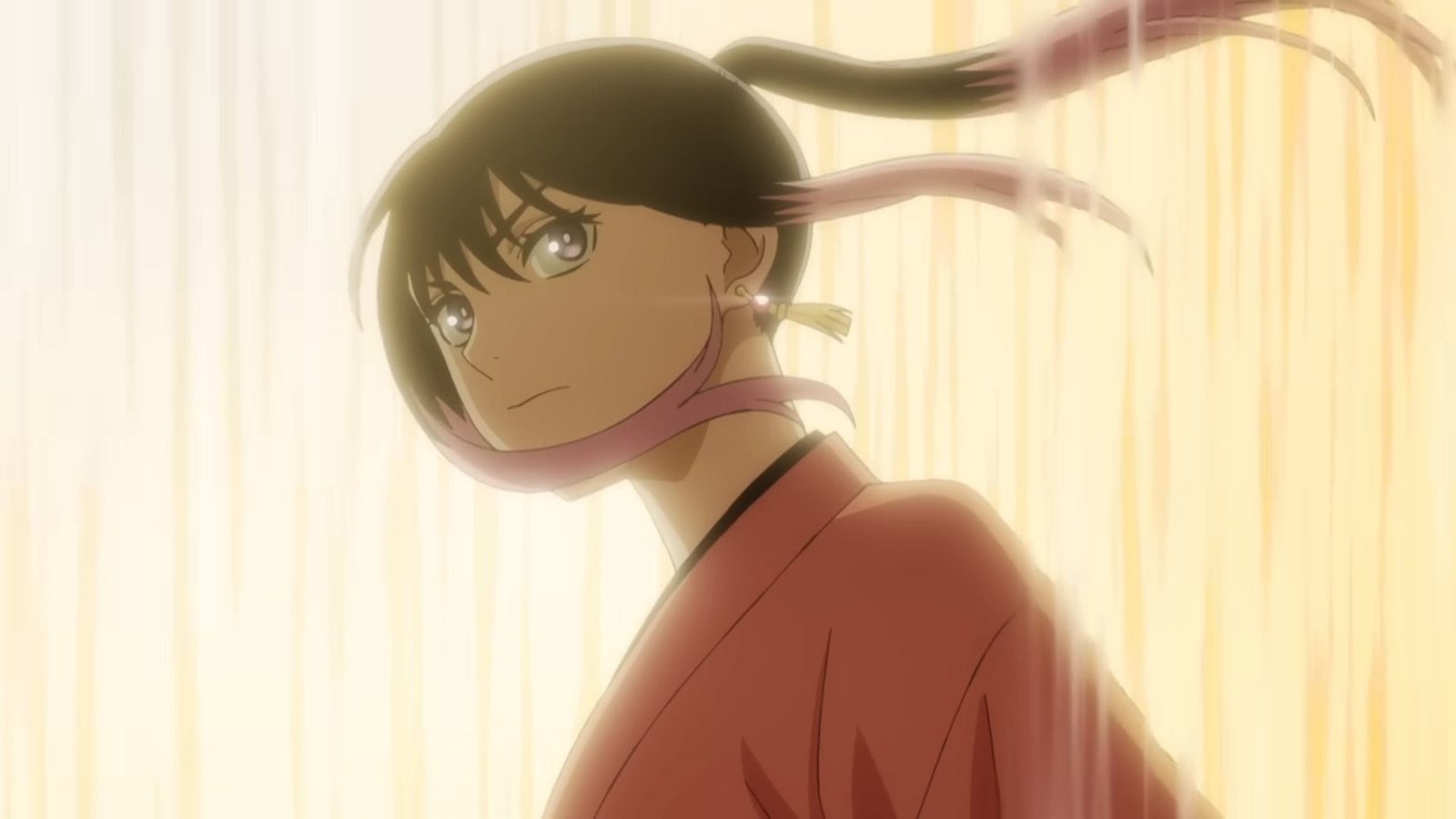
At Anime NYC, we at Anime Herald had the chance to talk with the team behind the successful rakugo manga Akane-banashi. We were able to speak with editor Seisuke Araki and TV Asahi producer Kazuki Endo.
Anime Herald: Rakugo is a niche subject, even in Japan. Can you share what made Akane-banashi so special that it was able to maintain an audience in Weekly Shonen Jump?
Seisuke Araki: When working on Akane-banashi, we wanted to make it very easy to understand for the Shonen Jump readers. Akane-banashi is catered towards the target audience of Shonen Jump.
There is a very specific way to write shonen stories. For example, in Akane-banashi, the main character has a very goal-oriented mindset. She has a clear goal, and the series is formatted around that. It’s easy for the readers to follow and understand. That’s the first part, the structure.
The second part is the topic of rakugo. Rakugo is a very male-dominated field. There are not a lot of female performers. The fact that the main character is a high school girl is very rare within the rakugo scene. That idea of a sole high school girl entering the rakugo scene and having to become the best within that scene as a rare demographic; I feel that adds to the catharsis when reading the series. I think that is the second main reason for the appeal of the series.

Anime Corner: Many elements of the story appear to be inspired by real-life events. To what extent do you and Suenaga-sensei research real life rakugo school events when creating the manga?
Seisuke Araki: When it comes to researching, there is a lot of interviewing rakugo performers, and reading written documents covering events from rakugo history. When it comes to interviews, sometimes the performers will mention, “My master pointed out these aspects of my performance.” The little bits of personality that come out in these interviews sometimes will go directly into the manga as characterizations of the characters in the series.
When it comes to written documents, there are a lot of famous events that happened within rakugo history. For example, the whole expulsion event that happened at the start of the series is based on a true story. There is a lot of reading into written documentation of historical events. That, and the interviews with rakugo performers, are the main basis of the research that the author puts into the series.
Manga Mavericks: Which rakugo story from the manga are you most looking forward to seeing depicted in the anime?
Seisuke Araki: I would like to say “Jugemu.” It’s very solid. The “Jugemu” performance is done multiple times. In the manga, there are multiple depictions of how the performance evolves over time, after multiple repeat performances. In the anime, I am looking forward to how the voice actors perform “Jugemu,” and how they adapt the evolution of each performance. I’m also looking forward to the animation direction and how they animate each of the performances.
Kazuki Endo: I’m looking forward to “Shibahama.” It is probably the only performance done by two different characters. The work itself talks about the relationship between a husband and wife. It is a very emotional piece. I’m going to work hard on the animation in terms of showing the different emotions involved.
Anime Herald: How closely did you work with the production team from ZEXCS? Do they have a lot of creative freedom?
Kazuki Endo: The producer of Akane-banashi is the CEO of ZEXCS, Kiyoshi Shintaku. Shintaku-san is a big fan of rakugo. Almost daily, there are talks about how to improve the series, and improve the adaptation. There is a lot of effort put into the rakugo performances. We’ll have actual rakugo performers perform the piece, so that we can more realistically adapt it into animation.
We basically have daily talks with the production team and the production team staff on how to improve the quality of the series.
Seisuke Araki: When it comes to the production team and the authors themselves, they only meet once over several months. During those meetings, there is a lot of discussion about how the production team wants to animate several scenes, including the “slice of life” scenes from daily life. The production team will share their thoughts. The authors will share their input. Each session feels very valuable to the production.
Anime Corner: Are there any plans to use motion-capture or special animation techniques to capture the precise look and feel of a live rakugo performance?
Kazuki Endo: The short answer is that we are not going to use CGI, or motion-capture, or any of those technologies. The reason behind that is that when working on a show about rakugo, rakugo is a part of Japanese culture that puts a lot of emphasis on the humanity of the performance of the piece. We wanted to make sure to maintain the hand-drawn feel of the animation.
Manga Mavericks: How did you become the editor of Akane-banashi?
Seisuke Araki: The short answer is that HR assigned me to the job. When it comes to Shonen Jump, it is very rare for a single editor to work on a series for its entire run. I was the second editor for Akane-banashi. With Shonen Jump, often an editor will start on a series and work with the author to develop the series. Then, once a series has become established, the work will get passed down to a newer editor. In this case, I was assigned to Akane-banashi by my superior.
The short answer is Shonen Jump made me. (Laughs)

Anime Herald: Welcome to New York! Do you have any fun stories from your trip?
Seisuke Araki: I went to MOMA (The Museum of Modern Art).
Kazuki Endo: I went to Grand Central Station, and went to The Great Gatsby on Broadway.
Anime Corner: What aspects of the series do you most want the audience to focus on?
Kazuki Endo: I want people to focus on the rakugo performances. Obviously, it is still in production, so we don’t know how they are going to go. We’re putting a lot of effort into them, the small movements of the rakugo performers. The voice actors are taking rakugo lessons and going to rakugo training.
Seisuke Araki: I want people to watch out for the rakugo performances, but I also want people to pay attention to the slice-of-life scenes. Looking at the storyboard, I feel that a lot of work has gone into how the character’s emotions are displayed in the slice-of-life scenes. It’s almost Ghibli-esque, how warm the atmosphere is. The everyday lives of the characters.
Manga Mavericks: How did you and TV Asahi become involved in this project?
Seisuke Araki: My grandparents took me to a lot of rakugo performances. I was drawn into the world of rakugo. There was a time I wanted to become a rakugo performer. I memorized a few performances, to perform as an amateur. As time passed, the hobby faded. Once I read the manga and how rakugo was introduced, I wanted to make sure this would be made into an anime. I went to Shueisha; I prepared a very thorough pitch, with plans for the plot and who would direct. I got the okay, which is the anime got produced.
Anime Herald: Do you have any questions for us?
Kazuki Endo: I was concerned with how rakugo would be received overseas. I felt rakugo would be difficult to get into from an overseas perspective. Is it something that you are interested in?
Anime Herald: We live in the only city in the United States that has a rakugo in residence, Katsura Sunshine. I’ve seen his performance and those of his students. I enjoy rakugo. I think people enjoy storytelling in general. That’s the thing you need to let people know. Rakugo is just a form of storytelling. Once people know that it is a slice-of-life show about storytelling, they’ll tune in.
Seisuke Araki: Before coming to America, I thought rakugo was more similar to a stand-up comedian. You are suggesting it’s closer to a storyteller? What do you think?
Anime Herald: Are you familiar with Mel Brooks? He coined a term in regards to stand-up comedy: “stand-up philosopher.” People who talk about things in a comedic fashion. Rakugo’s more like telling a joke a hundred times, or even 1,000 times, until you master telling the joke.
Manga Mavericks: Part of it is stage presence and knowing how to command an audience. Knowing when your jokes are landing and when to pivot. It’s crowd work. Rakugoka master that over time. That’s why rakugo has the master-disciple relationship. They learn the tricks over time.
Anime Herald: Rakugo masters have schools and disciples. Comedians don’t have students.
Manga Mavericks: For the voice comic, Akane Osaki and Tohru Osaki were voiced by a father-daughter combination who also performed as rakugoka, Kappei Yamaguchi and Akane Yamaguchi. Why did you go in a different direction for the anime?
Kazuki Endo: Their performances in the voice comic were fantastic. When it comes to anime, voicing an anime is very different than voicing a voice comic. We decided to start fresh with a new audition. We decided that after her training Anna Nagase would better fit the anime character.
Manga Mavericks: While many classic rakugo stories are public domain, there have been others that have been revived or reinvented by specific rakugoka. Have you had to get permission to depict any particular rakugo stories for the manga, and now again, for the anime?
Seisuke Araki: When it comes to the original manga, we try to make sure the readers can fully understand what is happening in the rakugo, so we took some creative liberties to modernize the works that are introduced in the manga. One of the examples is a story that takes place in a schoolhouse. We have modernized it so that it takes place in a college campus. That’s one example from the series.
Kazuki Endo: As you said, the traditional stories are public domain. Some of the abridged versions that modern rakugo performers have done, we’ve brought in some modern versions that the performers have worked on. It’s not the one they’ve performed in real life, they are originals created for the manga.
The Akane-banashi anime is currently streaming worldwide on YouTube. A second season has been confirmed for January 2027.
a-conversation-with-the-akane-banashi-team